
Women in Motorcycling: Breaking Stereotypes and Building Communities
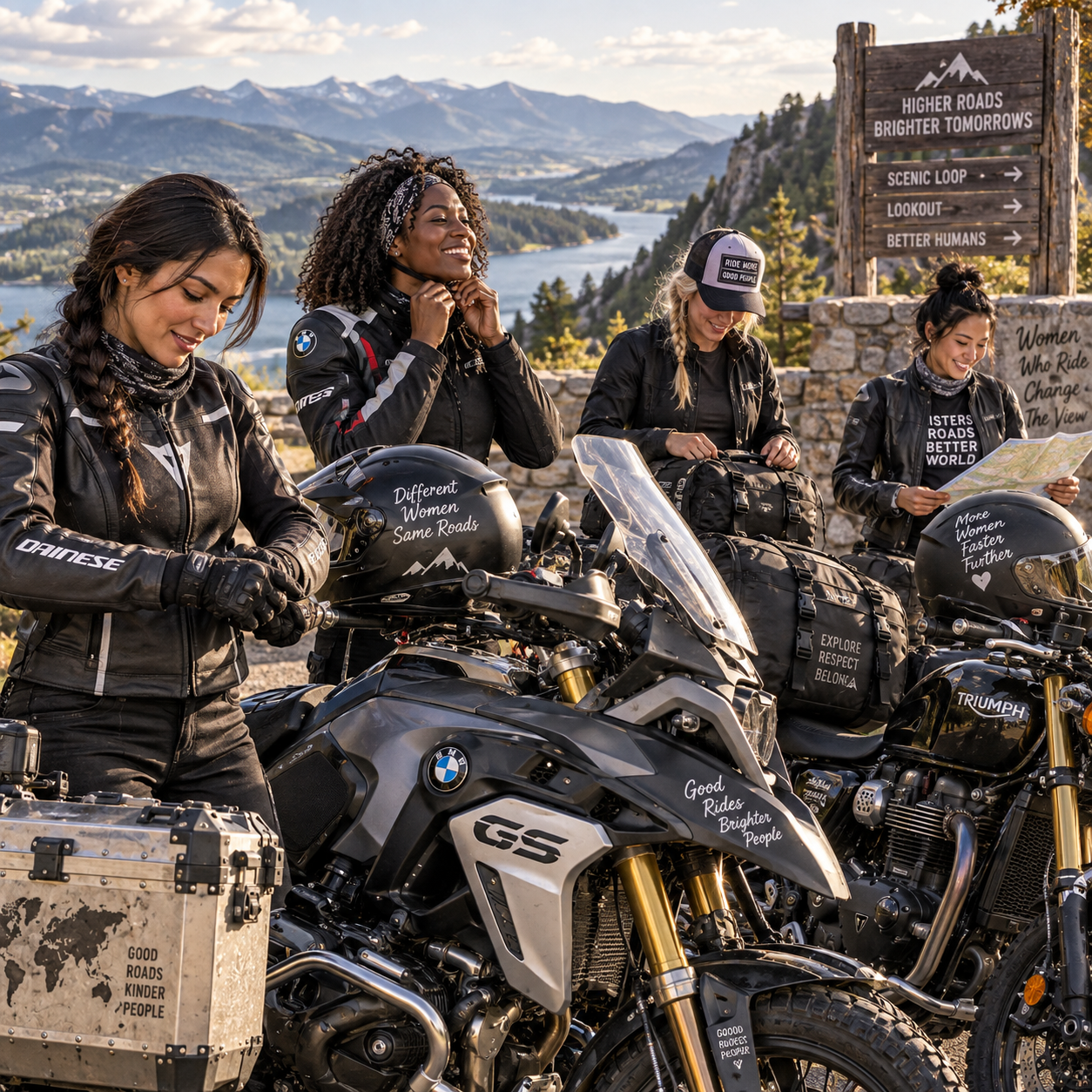
Women have always been part of motorcycling, yet their stories and expertise have not always received equal attention. Today, women motorcyclists are increasingly visible as riders, instructors, mechanics, organizers, club leaders, travelers, and community builders.
Their participation is changing the conversation around motorcycle culture. A rider’s credibility comes from experience, judgment, preparation, and respect for the road, not from gender or appearance. As more female riders connect through clubs, events, group rides, and online communities, they are creating spaces where more people can find confidence and belonging.
The Changing Role of Women in Motorcycle Culture
Women are shaping motorcycle culture as active participants, leaders, and experts across nearly every part of the riding world. Their role extends far beyond simply joining an established scene.
Women ride for many reasons. Some enjoy the focus and independence that riding provides. Others are drawn to touring, commuting, adventure riding, track days, charity events, restoration projects, or the friendships formed along the way. There is no single female riding identity, and no particular motorcycle, clothing style, or skill level defines a woman’s place in the community.
Female riders also contribute behind the scenes. They organize motorcycle events, moderate digital forums, lead safety workshops, support charitable causes, and welcome newcomers at local meetups. In many riding communities, women are helping set standards for communication and cooperation.
Visibility matters, but representation alone is not enough. A woman may appear in promotional material or event photography without receiving genuine respect for her knowledge. Meaningful inclusion means being invited into conversations, trusted with responsibility, and treated as a motorcyclist rather than a novelty.
Challenging Common Stereotypes About Female Riders
Female riders challenge stereotypes by demonstrating that motorcycling has no fixed gender, personality, or riding style. Women can be beginners or highly experienced, cautious or adventurous, mechanically skilled or still learning.
One common assumption is that women ride only because a partner or family member introduced them to motorcycles. Some do discover riding through personal relationships, but many choose it independently. The motivation might be freedom, practical transportation, technical curiosity, travel, or the simple pleasure of learning a demanding skill.
Another stereotype suggests that women should prefer smaller, less powerful, or less challenging motorcycles. The right motorcycle depends on a rider’s body position, experience, intended use, and comfort with the machine. A lightweight commuter, a touring motorcycle, a standard, a scooter, or an adventure bike can all be valid choices.
Women also encounter the idea that they must prove themselves repeatedly before being accepted as real motorcyclists. That standard is unfair and inconsistent. Experienced riders should welcome questions from beginners, while new riders should be encouraged to build competence at a responsible pace rather than perform confidence for an audience.
Barriers Women May Encounter in Motorcycling
Women may face barriers involving representation, equipment, confidence, social expectations, and exclusionary behavior. These obstacles are real, but they do not define women’s capabilities or prevent them from finding supportive communities.
Limited representation can make a new rider wonder whether she belongs. If local events, training materials, or club leadership show only one type of motorcyclist, women may receive the message that they are guests rather than members.
Equipment can create a practical barrier. Protective gear must fit correctly, allow movement, and suit the weather and riding environment. Poorly fitting gloves, boots, jackets, or helmets can reduce comfort and concentration. Women should be able to ask about fit without being redirected toward decorative or unsuitable products.
Confidence can also be complicated. A rider may understand the fundamentals yet hesitate after dismissive comments, an intimidating group ride, or a difficult early experience. Confidence grows through repeated, manageable practice: low-speed control, braking, cornering, route planning, and riding with people who respect personal limits.
Finally, some women encounter unsolicited instruction, assumptions about their competence, or pressure to ride beyond their comfort zone. The correction is straightforward: listen first, ask before advising, and treat boundaries as part of responsible riding rather than a weakness.
Building Supportive Riding Communities
Supportive riding communities grow through respectful leadership, shared learning, and activities that make participation accessible. Women-led motorcycle clubs, mentorship programs, group rides, online spaces, and local events can all provide that foundation.
Women-only clubs and rides can be especially useful for people who want to ask basic questions, practice skills, or meet other riders without feeling watched. Their purpose is not separation for its own sake. These spaces can provide a low-pressure entry point, after which riders may choose to participate in broader motorcycle clubs and mixed group rides.
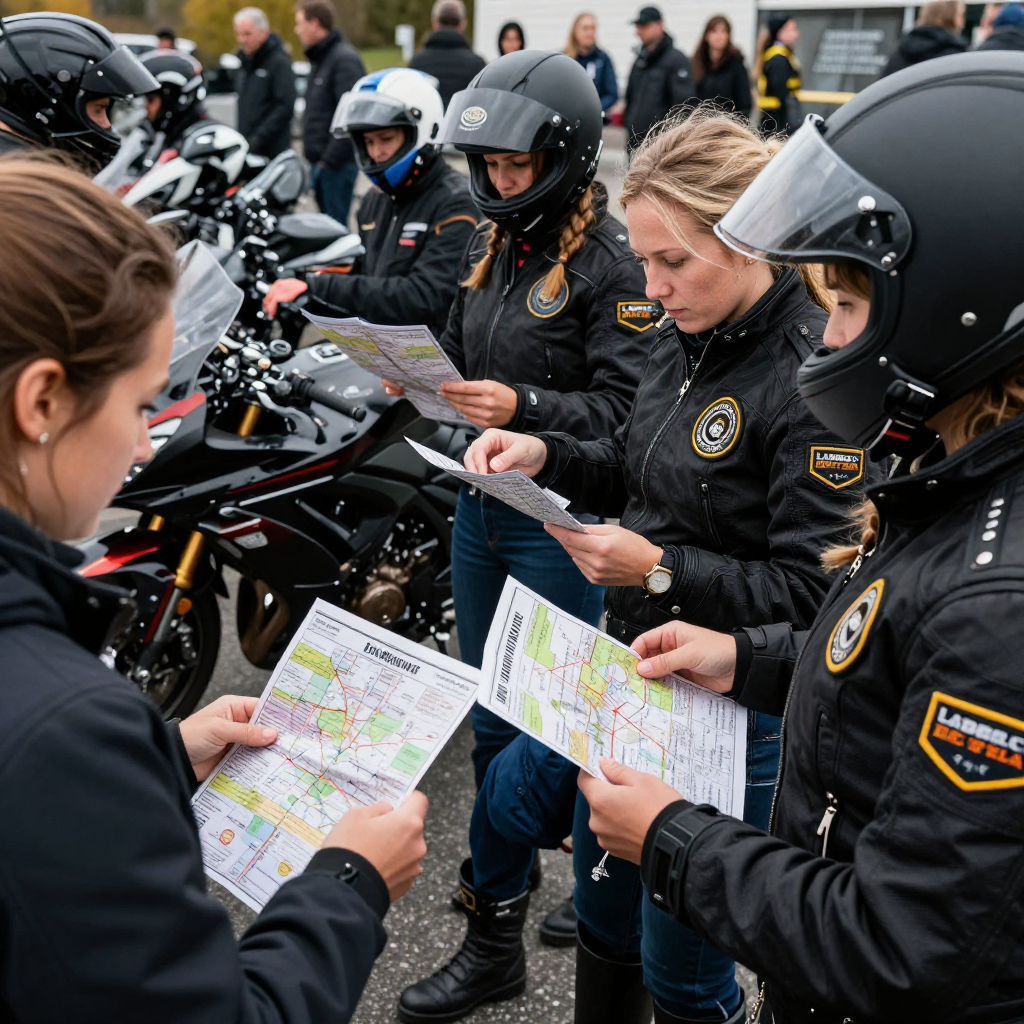
Effective group rides also require structure. Organizers should explain the route, fuel stops, expected pace, communication signals, weather considerations, and what to do if someone falls behind. A simple pre-ride briefing can prevent confusion and reduce pressure to keep up.
Mentorship works best when it is specific. A mentor might help a new rider inspect a motorcycle, plan a first solo route, practice emergency braking, or understand group-ride etiquette. The relationship should support independence rather than create dependence.
Digital communities widen access for riders who live far from a club or have irregular schedules. Moderators can make these spaces safer by addressing harassment, removing personal attacks, and encouraging useful answers instead of competitive posturing.
The Benefits of Representation and Inclusion
Representation helps prospective riders imagine themselves in motorcycling, while inclusion gives them practical support to continue. Together, they strengthen individual confidence and the wider riding community.
When women see other women leading rides, teaching maintenance, competing, or touring long distances, motorcycling appears more accessible. A visible example can answer an important question before it is spoken: “Is there a place for someone like me here?”
Inclusion also improves community habits. Events become easier to navigate when organizers communicate clearly, consider different experience levels, and provide space for questions. Experienced riders may discover that teaching patiently improves their own understanding of road strategy and risk management.
There is a useful distinction between visibility and belonging. A photograph of a woman at an event creates visibility. Asking for her ideas, crediting her work, and ensuring she can participate safely creates belonging. Motorcycle culture becomes stronger when both are present.
These gains benefit everyone. New riders receive clearer pathways into the community, clubs gain broader perspectives, and experienced motorcyclists build relationships beyond familiar social circles. Inclusion is not a competition between genders; it is a way to make shared spaces more welcoming and resilient.
How Riders and Motorcycle Organizations Can Support Inclusion
Riders and motorcycle organizations support inclusion by practicing respect, improving access, and recognizing women’s expertise. Small changes in behavior often have a larger effect than slogans.
- Ask before advising: Offer help without assuming a woman is inexperienced or unable to solve a problem.
- Use clear event information: Publish the route length, pace, skill expectations, costs, meeting point, and safety requirements before registration.
- Build mentorship into clubs: Pair willing mentors with new riders for practical goals rather than vague encouragement.
- Challenge exclusionary comments: Address sexist jokes, gatekeeping, and harassment instead of treating them as harmless motorcycle banter.
- Recognize expertise: Invite women to lead workshops, plan routes, speak at events, and hold decision-making roles.
- Respect different participation levels: A rider who chooses a shorter route or slower pace is still contributing to the community.
Organizations should also review their communication. Language that assumes every rider is male can quietly signal who the event was designed for. Inclusive wording does not require complicated policies; it requires paying attention to who feels addressed and who remains invisible.
Support has limits when it becomes performative. Featuring women while ignoring complaints about harassment will not build trust. Consistent conduct matters more than a single awareness campaign.
Getting Started or Getting More Involved
To enter or deepen your place in motorcycling, start with a manageable goal, connect with respectful riders, and build experience progressively. You do not need to adopt a particular image or prove yourself before you belong.
- Define your next step. Consider a rider training course, a local meetup, a beginner-friendly group ride, or a conversation with an experienced motorcyclist.
- Research the community. Look for clear event details, realistic skill expectations, active moderation, and evidence that organizers welcome questions.
- Attend before committing. A coffee meetup or short ride can reveal more about a club’s culture than its social media description.
- Check the ride plan. Ask about distance, pace, road type, fuel stops, weather, communication, and the procedure for mechanical problems.
- Protect your independence. Keep your own emergency contacts, navigation plan, required gear, and transport options. Community support should add confidence, not remove your agency.
Before joining a group ride, consider whether the organizer explains expectations and whether you feel comfortable saying no to an unsafe suggestion. A good group will not punish a rider for turning back, asking for a break, or choosing a different pace.
For broader road-safety guidance, riders can consult resources from the National Highway Traffic Safety Administration. Training and good judgment remain more valuable than appearing fearless.
Frequently Asked Questions About Women in Motorcycling
What challenges do women face in motorcycling?
Common challenges include limited representation, poorly fitting gear, unsolicited assumptions, confidence gaps, and exclusionary attitudes. Supportive training and respectful communities can reduce these barriers.
How can women find supportive motorcycle communities?
Search for local women-led clubs, beginner-friendly group rides, motorcycle events, training organizations, and moderated online communities. Read event information and observe how members respond to questions before joining.
Are women-only motorcycle clubs or events useful for new riders?
Yes. Women-only clubs and events can offer low-pressure practice, practical mentorship, and a sense of belonging. They are one pathway into motorcycling, not a requirement for participation.
How can male riders become better allies?
Male riders can listen, ask before giving advice, challenge sexist behavior, share accurate information, and respect a woman’s decisions about pace, equipment, and participation. Treating female riders as peers is the essential starting point.
What should someone consider before joining a group ride?
Check the route, distance, pace, weather, fuel stops, skill requirements, communication plan, and emergency procedures. Choose a ride that matches your current experience, and leave if the group pressures you into unsafe decisions.
Women in motorcycling are already shaping the culture they enter. Through skill, leadership, friendship, and persistence, female riders are expanding the definition of who belongs on two wheels. The strongest riding communities make room for that diversity and judge membership by conduct, competence, and mutual respect.