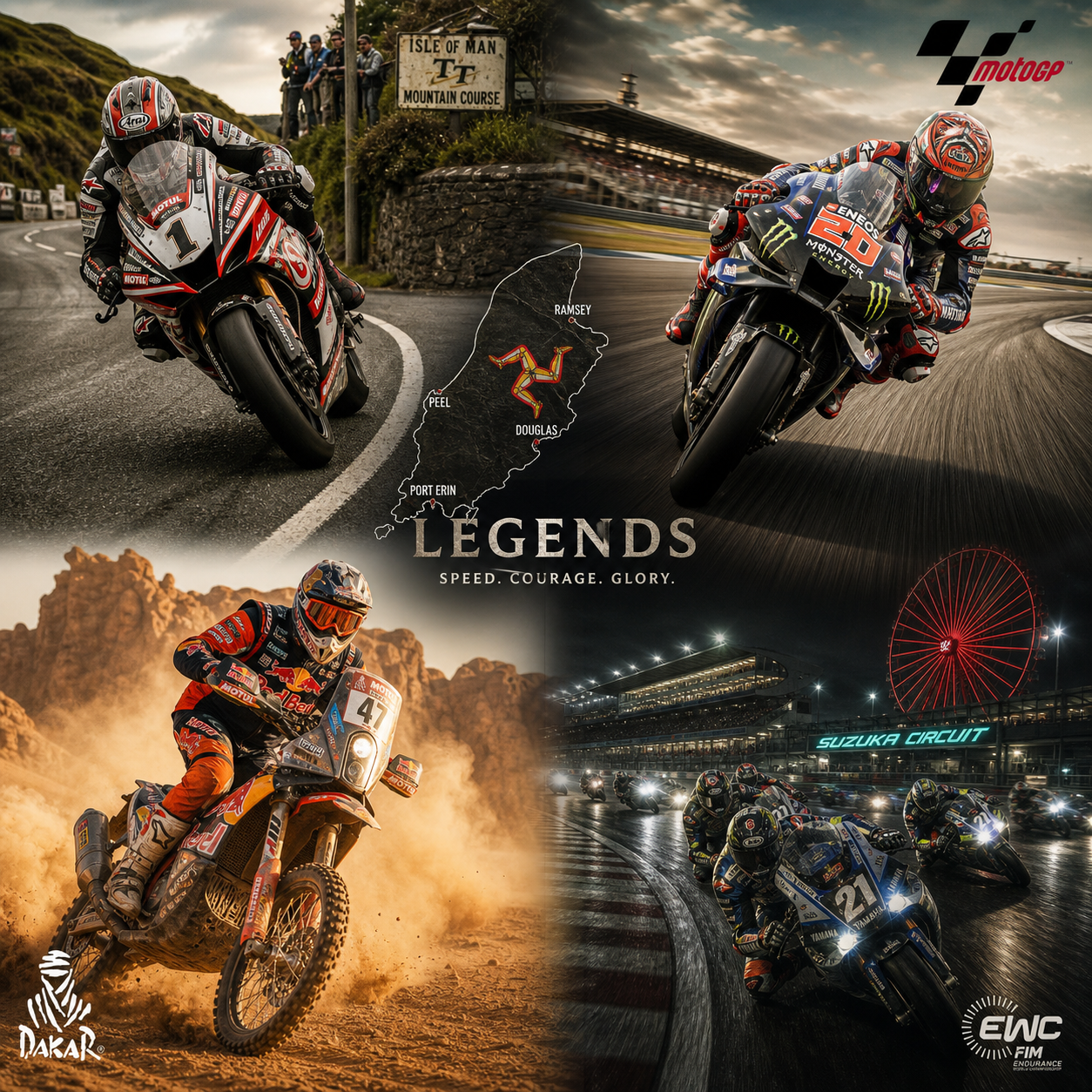
The Psychology of Motorcycle Enthusiasts: Why We Ride
Ask a hundred riders why they ride, and you'll get a hundred different answers. Some will talk about freedom. Others mention the focus, the community, or the feeling of being fully alive in a way that's hard to explain to someone who's never swung a leg over a tank. But underneath all those answers, there are common threads — psychological, neurological, and deeply human ones. This is an attempt to trace them.
More Than a Machine — The Emotional Bond Between Rider and Bike
The relationship between a rider and their motorcycle is genuinely unlike any other bond a person forms with a machine. It's not nostalgia or sentimentality — it's something more functional and more primal. The bike responds to your body weight, your grip pressure, your breathing. You don't operate it so much as negotiate with it.
This physical dialogue creates what psychologists call an extension of self. The motorcycle stops being an object and starts being part of how you move through the world. Riders name their bikes, talk to them, feel genuine grief when they're damaged or sold. That's not irrationality — that's the natural result of thousands of hours of intimate, high-stakes interaction.
There's also the element of ritual in the bond. The pre-ride check. The specific way you pull on your gloves. The moment before the engine turns over. These small ceremonies accumulate into something that feels sacred, and they're part of why riding becomes a lifestyle rather than just a hobby.
The Flow State on Two Wheels
Riding a motorcycle is one of the most reliable ways to enter a flow state — the condition of total psychological absorption that psychologist Mihaly Csikszentmihalyi spent decades studying. Flow happens when challenge and skill are precisely matched, and when the activity demands your complete attention. Motorcycling checks every box.
You cannot ride well while thinking about your mortgage. The road requires you — your eyes scanning ahead, your hands managing throttle and brake, your body leaning through corners. There's no mental bandwidth left for rumination. That enforced presence is, for many riders, the entire point.
What makes riding unusual as a flow trigger is that it engages the whole body, not just the mind. Unlike chess or coding — activities that can also produce flow — motorcycling is kinesthetic and spatial. The result is a quality of absorption that feels almost meditative, even at speed. Riders often describe long solo rides as the closest thing they have to genuine mental quiet.
Adrenaline, Dopamine, and the Neurochemistry of the Ride
Riding feels good because it literally is good — neurochemically speaking. The experience triggers a cascade of neurological responses that are, in the most direct sense, addictive.
When you accelerate hard or lean deep into a corner, your adrenal glands release epinephrine. Heart rate climbs, senses sharpen, time perception shifts slightly. That's the adrenaline response — and while it sounds purely stress-related, in a controlled, skilled context it reads as exhilaration rather than fear. The distinction matters: riders aren't seeking terror. They're seeking the sharpened aliveness that comes with managed intensity.
Alongside adrenaline, dopamine plays a central role. The anticipation of a ride, the execution of a clean corner, the arrival at a destination — each phase triggers dopamine release. Over time, the brain begins to associate the entire ritual of riding with reward. This is why experienced riders often describe a physical restlessness when they haven't ridden in a while. It's not metaphor. The neurochemistry is real.
Some research also points to elevated endorphin levels during and after riding, contributing to the well-documented post-ride sense of calm and satisfaction. The bike doesn't just wake you up — it settles you down afterward.
Freedom, Identity, and the Rider's Self-Concept
For many riders, motorcycling becomes inseparable from who they are. Rider identity isn't a costume — it's a genuine reorganization of how a person understands themselves and their place in the world.
Part of this comes from the autonomy that riding represents. On a motorcycle, you choose your route, your pace, your destination. You're not sealed in a climate-controlled box following GPS instructions. You're making continuous, consequential decisions. That sustained exercise of agency feels meaningful in a world where so many choices are made for us.
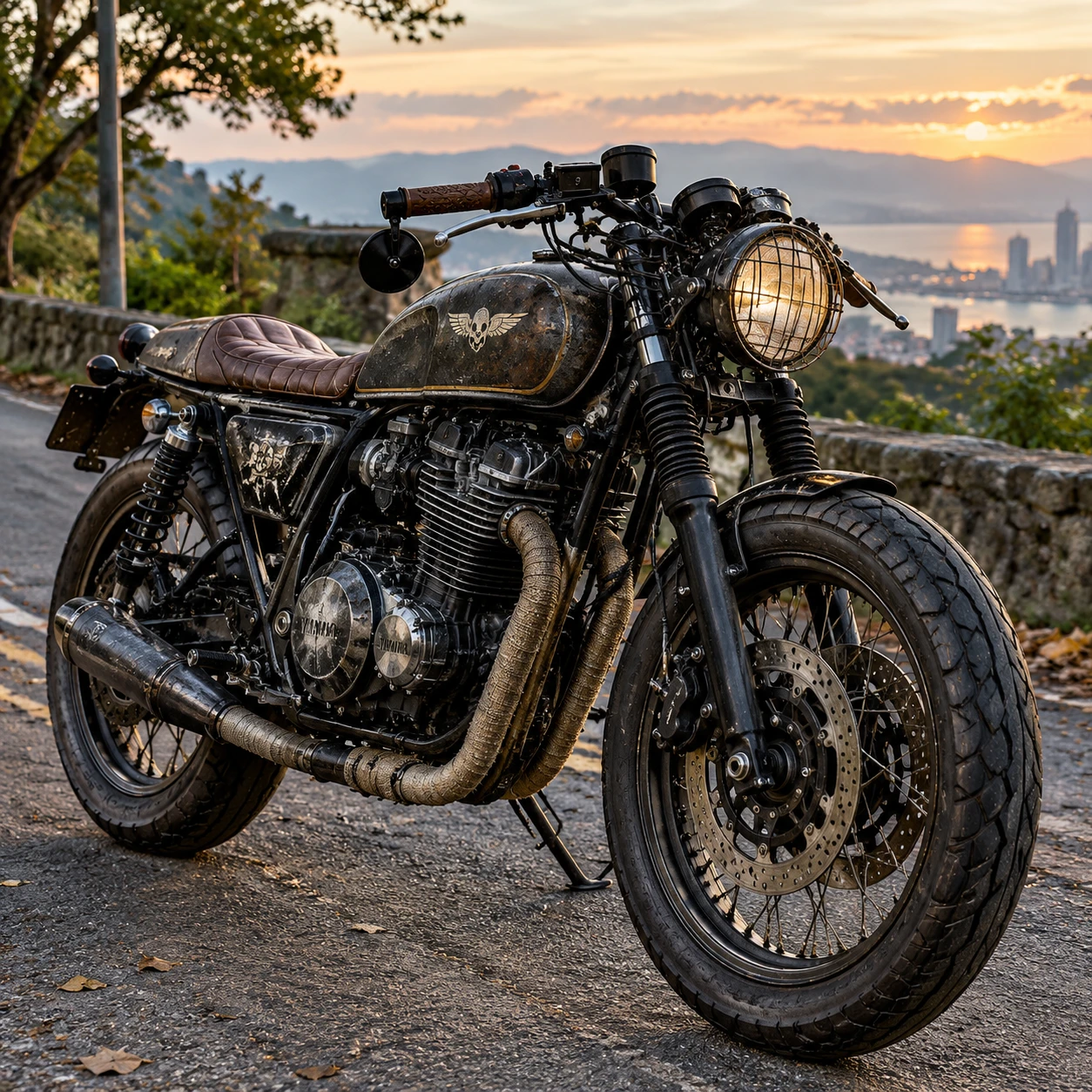
There's also a strong thread of self-expression running through motorcycle culture. The bike you choose, how you modify it, what you wear, where you ride — all of it communicates something about your values and your aesthetic. Riders aren't a monolith. A person on a stripped-down café racer and a person on a full-dress touring bike are telling very different stories about themselves, and both stories are genuine.
Over time, riding becomes part of a personal mythology. The trips you've taken, the roads you've learned, the challenges you've overcome on a bike — these become formative experiences that shape how you narrate your own life. That's not trivial. It's how identity is built.
The Risk Factor — Why Danger Doesn't Deter, It Draws
The honest conversation about motorcycle psychology has to include risk — not to moralize about it, but to understand it. Riders are not oblivious to danger. Most are acutely aware of it. And yet they ride anyway, which requires some explanation.
The psychological concept at work here is risk-reward calibration. Riders don't experience danger as a pure negative to be avoided — they experience it as a variable to be managed. The risk is part of what makes the reward feel real. A perfectly safe activity that produces no uncertainty also produces no genuine accomplishment. Riders understand this intuitively.
There's also a distinction between recklessness and risk tolerance that often gets collapsed in outside discussions of motorcycling. Most experienced riders are not thrill-seekers in the reckless sense. They're people who have developed genuine skill, trained their responses, and chosen to operate in a domain where the margin for error is real. The danger isn't ignored — it's respected. That respect is part of what makes riding feel serious and meaningful rather than trivial.
Psychologically, this maps onto what researchers call sensation-seeking — a trait associated with creativity, openness to experience, and a preference for intensity over comfort. Riders tend to score high on this trait, but that doesn't make them reckless. It makes them people who need more from life than safety and predictability can offer.
Community, Brotherhood, and the Tribe Mentality
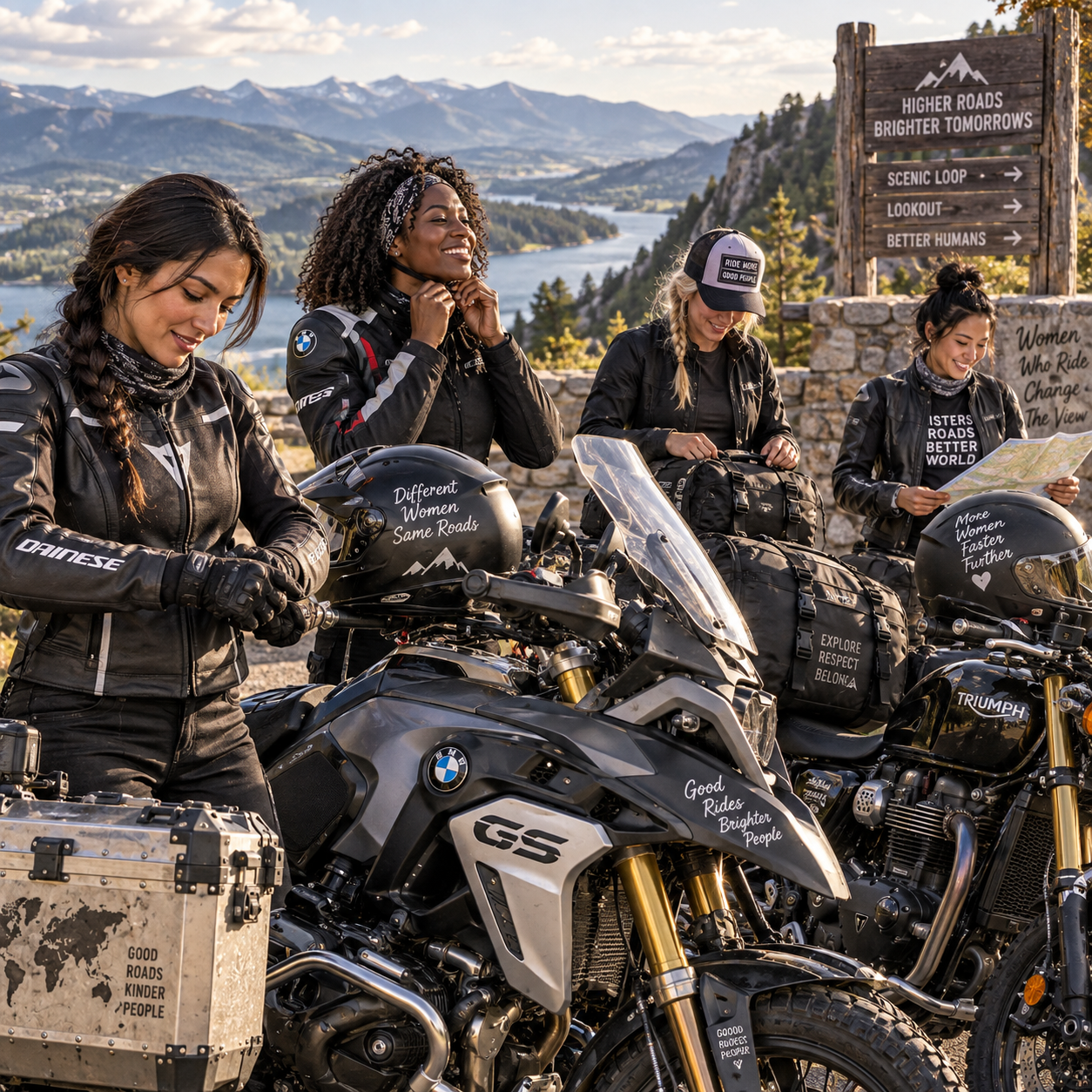
The motorcycle community is one of the most striking examples of voluntary tribe formation in modern life. Riders who have never met will nod to each other on the road, stop to help a stranger with a breakdown, and share meals around a campfire after one day of knowing each other. The bond forms fast and runs deep.
Social psychologists would point to several mechanisms here. Shared risk creates cohesion — groups that face challenges together develop stronger bonds than those that don't. Shared identity markers (the gear, the bikes, the language) create immediate in-group recognition. And the culture of motorcycle storytelling — the swapping of road tales, close calls, and discoveries — builds a collective narrative that members feel part of.
What's notable about motorcycle community is that it tends to cut across other social divisions. Age, profession, background — these matter less than they do in most social contexts. What matters is whether you ride. That shared practice creates a leveling effect that many riders describe as one of the things they value most about the culture.
The rite of passage dimension reinforces this. For many people, getting their first bike, completing their first long solo trip, or riding a road they'd been afraid of is a genuine threshold moment. Sharing those moments — and being witnessed in them — is part of what makes the community feel like more than a hobby club.
Riding as Ritual — Escapism, Mindfulness, and the Open Road
At its deepest level, riding functions as a deliberate ritual — a recurring practice that provides structure, meaning, and psychological reset. This is different from escapism in the avoidant sense. It's closer to what psychologists call restorative experience: an activity that replenishes rather than depletes.
The open road offers something genuinely rare: a context where your only obligation is to ride well. No notifications, no competing demands, no one needing something from you. For people whose daily lives are dense with responsibility, that temporary simplicity isn't running away from life — it's returning to themselves.
This is why riding functions so effectively as mindfulness on the road. Not the app-mediated, guided-breathing kind, but the raw version: full presence enforced by circumstance. The road doesn't care that you're distracted. It requires your attention, and in requiring it, gives you the relief of having nothing else to think about.
Riders who have been at it for decades often describe the ritual quality of riding as the thing that sustains them — not the speed, not the gear, not even the community, though all of those matter. It's the recurring act of getting on the bike and going. The road as a place where things become clear. That's not a small thing. For many people, it's essential.
FAQ: The Psychology of Riding
Is there a psychological profile that describes most motorcycle riders?
There's no single profile, but research on personality traits consistently finds that riders tend to score higher on sensation-seeking, openness to experience, and autonomy-seeking compared to the general population. What's more interesting is the range — riders include introverts and extroverts, risk-tolerant and risk-aware personalities, people drawn by community and people drawn by solitude. The common thread is a preference for experiences that feel real and consequential.
Why do some people feel addicted to riding?
Because the neurochemistry of riding — the adrenaline, dopamine, and endorphin response — creates genuine reward conditioning over time. The brain learns to associate the ritual of riding with a cascade of positive neurological events. When that ritual is interrupted, the absence is felt physically, not just emotionally. This isn't a flaw in the rider's character. It's how reward systems work.
How does riding affect mental health and stress levels?
Most riders report significant stress reduction from regular riding. The enforced present-moment focus disrupts rumination, the physical engagement releases tension, and the post-ride neurochemical state tends toward calm rather than agitation. That said, riding is not a substitute for professional mental health support when that's what's needed. It's a tool, and a powerful one, but not a universal solution.
Why is the motorcycle community so loyal and tight-knit?
Shared risk, shared identity, and shared narrative create unusually strong social bonds. When you've both navigated a mountain pass in deteriorating weather, or both know what it feels like to be invisible to a distracted driver, you have a foundation for connection that goes deeper than most casual social contexts allow. The community also has a strong oral tradition — stories are how membership is expressed and maintained.
Can riding be considered a form of mindfulness or meditation?
In functional terms, yes. Riding produces many of the same psychological outcomes as formal mindfulness practice: reduced rumination, heightened present-moment awareness, and a post-activity sense of clarity and calm. The mechanism is different — it's enforced attention rather than cultivated attention — but the result is recognizably similar. Many long-distance riders describe solo riding as the most effective mental reset available to them.